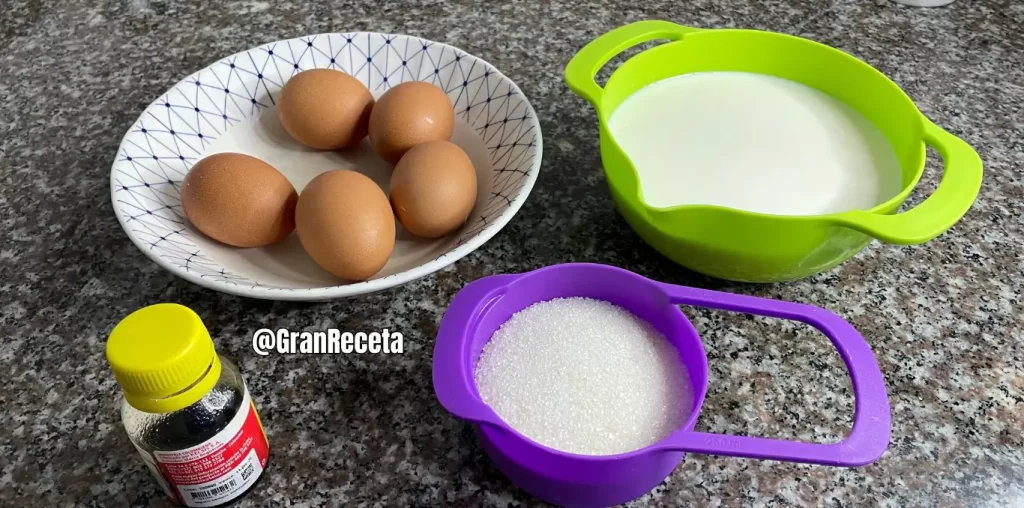
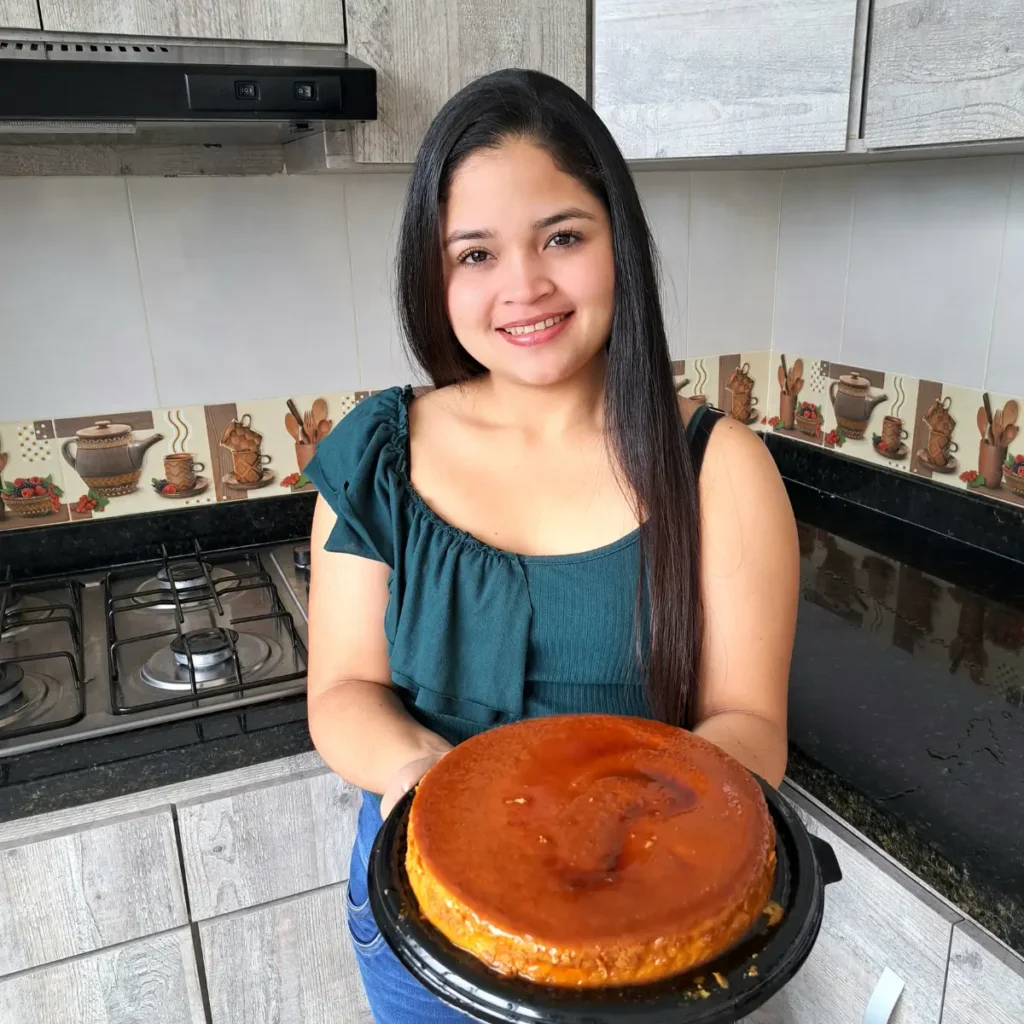
With just 4 ingredients and no oven, Colombian flan works exactly like an oven flan, and the only difference is the heat source. In the oven the heat comes from above and below; on the stovetop it comes from the hot water around the mold. The principle is identical: indirect, moist heat that sets the eggs without boiling them. If your kitchen has no oven, or you just don’t want to heat one up, this is the same silky caramel custard made entirely in a pot. The recipe below covers the two things people fear most: the caramel, and keeping the flan from curdling.
How do you make flan without an oven? Make caramel with sugar and water in a pan, whisk eggs, sugar, milk, and vanilla, strain, and pour over the caramel. Cook in a stovetop water bath over medium-low for 90 minutes, covered. Chill at least 4 hours before unmolding. About 350 minutes for 8 servings.
Why flan works without an oven
Flan sets through the coagulation of egg proteins with heat. Those proteins need a controlled temperature, around 80-85°C (175-185°F). Any hotter and they overcook, and the flan turns the texture of an omelet instead of custard.
The water bath, in the oven or on the stovetop, keeps the heat from ever exceeding 100°C (212°F), the temperature of boiling water, which protects the flan from overcooking. The oven has the advantage of even heat distribution, but on the stovetop with low heat and a foil lid the result is identical if you control the temperature well.
Why flan curdles. A curdled flan, with a grainy curd-like texture, comes from too much heat: the egg proteins contract and squeeze out the liquid. If the water bath boils actively instead of staying at a gentle simmer, the flan curdles. The towel in the bottom is the technique that cushions the bubbles of the boil.
The caramel, the part that intimidates most and is the simplest
Dry caramel and wet caramel give different results. Dry caramel (sugar only) is faster, more intense, and harder to control, burning in seconds if you look away. Wet caramel (sugar + water) is slower, more predictable, and better for beginners; the water keeps the sugar from burning unevenly in the first minutes while it dissolves. Use the wet version.
The most important rule of caramel: don’t stir. Stirring caramel as it cooks causes crystallization: the sugar turns grainy and opaque instead of liquid and clear. If you stir by accident, discard it and start over. If it browns unevenly, swirl the pan gently.
The right point. Deep amber, like dark honey. Too pale (yellow) and it tastes sweet but flat; too dark (almost black-brown) and it tastes bitter. The right color takes 5-8 minutes over medium from when the sugar starts to bubble.
Fitting it to your kitchen
- If it’s your first time with caramel — start with the wet version (sugar + water); slower but more controllable
- If your flan curdled last time — lower the heat; the water bath shouldn’t boil actively, only a very gentle simmer
- If you don’t have a flan mold — any deep metal mold works; avoid glass, which conducts heat less evenly on the stovetop
- If you want to unmold the same day — it needs at least 4 hours in the fridge; without that rest the flan isn’t firm enough to hold when unmolded
- If you’re cooking for 10+ — use two medium molds instead of one big one; a large mold takes longer and is harder to cook evenly
What ruins no-oven flan
Not straining the mixture. Egg membranes and any bubbles make spots of different texture in the finished flan, showing as holes or threads in the cut. Straining takes 30 seconds and is the step with the most impact on texture.
Water bath boiling actively. An active boil makes bubbles that knock the mold and create a porous texture on the base. The right heat level keeps the water barely moving, with almost no visible bubbles.
Unmolding it warm. Fresh-cooked flan is completely liquid in the center, since only the outside has set. It needs the hours in the fridge for the egg protein to complete its three-dimensional network. A flan unmolded without resting collapses.
Burnt caramel. Burnt caramel has a bitter taste that takes over the whole dessert. If it smells burnt or is very dark (almost black), discard it and start over. Better to lose 100 g of sugar than ruin the whole flan.
Variations
Condensed-milk flan. Replace the whole milk and part of the sugar with 1 can of condensed milk (397 g). Sweeter and denser, the most popular version in Venezuela.
Coconut flan. Swap 250 ml of whole milk for full coconut milk. A soft tropical flavor without changing the technique. Good with passion-fruit caramel.
With cream cheese. Add 150 g of softened cream cheese to the mixture before straining. Firmer texture and a more complex flavor, the version halfway between flan and Venezuelan quesillo.
Coffee flan. Add 1 tablespoon of instant coffee dissolved in warm milk. The coffee balances the sweetness of the caramel.
What to serve it with
Flan is served on its own with its natural caramel; it needs no accompaniment, and at about 210 calories a slice it’s the lightest of these custards. In Venezuela and Colombia it’s a Sunday-lunch dessert with black coffee. In Colombia it shares the December dessert table with natilla, creamy rice pudding, and buñuelos, though in Venezuela that role goes to quesillo. For another cold corn-and-milk sweet, a bowl of mazamorra rounds out the spread.
Nutrition
Per serving (of 8): about 210 kcal, 34 g carbohydrate (mostly the caramel and sugar), 6 g protein (from the eggs), 5 g fat, 32 g sugar. With only 4 base ingredients it’s a simple dessert — most of the calories are the sugar, while the eggs and milk carry the protein and calcium.
Flan and Venezuelan quesillo look like the same dessert but differ in real ways: flan has only egg, milk, and sugar, for a softer, airier texture; quesillo has condensed milk, whole eggs, and whole milk, for a denser, sweeter texture with the characteristic holes in the cut. I grew up eating quesillo in Venezuela, but when I came to Colombia, flan became the dessert I make when I want something simple with ingredients I always have at home. — Josnaisis.