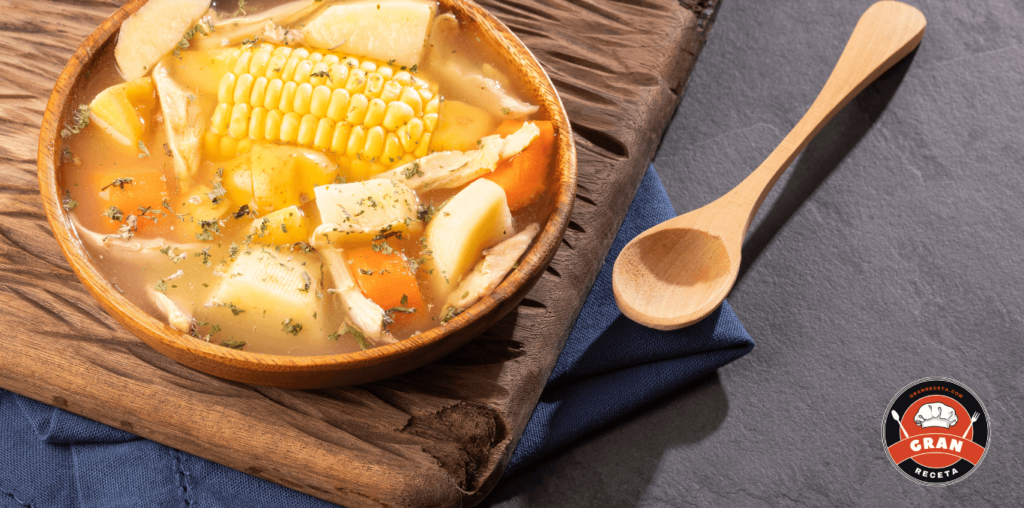
Ajiaco (ah-HYAH-koh) is the soup Bogotá is known for: a thick chicken and potato soup that gets its body from a floury potato falling apart in the pot, its yellow color from a small Andean potato, and its flavor from guascas, a wild herb that grows as a weed in Colombian gardens and is sold dried everywhere else. Bogotá marked its 488th birthday on August 6, 2026 with an official Ajiaco Santafereño Day. This is the home version with the three potatoes mapped to what a US supermarket sells, the guascas question answered honestly, a stage-by-stage timing chart and what it costs at US average prices.
What Colombian ajiaco is, and what makes it different from chicken soup
How do you make Colombian ajiaco? Simmer bone-in chicken breasts for 40 minutes with scallions, garlic and cilantro stems, then shred the meat. In that stock, cook a floury potato that breaks down and thickens the broth, a waxy potato that stays in slices, and corn on the cob for 25 minutes; add small yellow potatoes and guascas for the last 15. Serve with heavy cream, capers and avocado at the table. 90 minutes for 6 servings.
Ajiaco is the dish of Bogotá and the high Andean plateau around it, and three things separate it from every other chicken soup: three kinds of potato, each with a job; guascas as the only herb; and a table set with heavy cream, capers and avocado that each person stirs into their own bowl. The result is closer to a chowder than to a broth, thick enough to stand a spoon in.
One thing it is not: Cuban ajiaco, which is a stew of several meats with cassava, plantain and taro. Same name, different dish.
What guascas are, and whether you can skip them
Guascas are the leaves and tender stems of Galinsoga parviflora, a plant in the daisy family that the UK knows as gallant soldier and the US as a garden weed. Cooked, it gives a grassy, faintly sour note that no European kitchen herb matches. In Bogotá it’s sold fresh at markets; outside Colombia you’ll find it dried or frozen at Latin groceries and online.
Amounts: one small bunch (20 g) fresh or 3 tablespoons dried for 2 liters of stock. Soak dried guascas 10 minutes in a little hot stock, discard any woody stems, and add them with the yellow potatoes. Too much, and the broth turns bitter with no way back.
If you can’t find guascas, the honest answer is that there is no substitute. A generous handful of cilantro with a pinch of dried oregano gets you a good Bogotá-style chicken and potato soup that isn’t ajiaco. I keep a jar of dried guascas in the pantry (they last a year sealed) rather than make it without.
The three potatoes, and what to use in a US supermarket
In Colombia the three are papa pastusa, a floury potato that breaks down and thickens; papa sabanera, a firm white potato that holds its shape; and papa criolla, a small, intensely yellow potato with 23 % dry matter and 18 % starch by Agrosavia’s technical sheet for its Sol Andina variety. The floury one is the thickener, not the yellow one, as El Espectador’s food section explains; the yellow one gives color and some body at the end.
None of the three is sold under those names in a US store, and none needs to be. Russet does the pastusa’s job and breaks down in 25 minutes. Red or white waxy potatoes hold their slices like the sabanera. For the criolla, baby Yukon Gold left whole is the closest in color and size, and Latin groceries sell frozen papas criollas, which go in straight from the bag. What matters more than the variety is the order: the floury and waxy potatoes go in with the corn at minute 45, the small yellow ones at minute 70. Put the yellow ones in early and they vanish.
How long it takes
90 minutes from a cold pot, about 40 of them hands-on. Ajiaco only takes two hours if you do things one after the other. Peel while the chicken simmers, shred while the potatoes cook, and it fits in an hour and a half.
Three timings matter. 40 minutes for bone-in breasts at a bare simmer to get a stock with body (a whole chicken or a stewing hen takes longer; see variations). 25 minutes uncovered for the russet to break down. 15 minutes for the yellow potatoes and the guascas, and not more: the herb loses its aroma and turns bitter.
What it costs, and the cheaper bird
At the US city average retail prices the Bureau of Labor Statistics published for August 2026, boneless chicken breast was $4.173 per pound, so the 1.65 lb (750 g) of meat in this pot cost $6.89. A whole fresh chicken was $2.012 per pound: 2.2 lb (1 kg) for $4.43, bones and skin included, which is exactly what the stock wants. White potatoes were $0.976 per pound, so the 3.3 lb (1.5 kg) here cost $3.22.
The BLS doesn’t track corn on the cob, avocados, capers, cream or guascas, so they aren’t on the chart. Corn and avocado are seasonal and cheap; the guascas are the wildcard. A 1 oz (28 g) bag of dried guascas bought online will often cost more than all the potatoes, and it makes three or four pots.
How to make Colombian ajiaco, step by step
The five timed steps are in the recipe card above. These are the two that decide the bowl.
The stock needs bones, not boneless breast
Bone-in breasts simmer 40 minutes, covered, over medium heat in 2.5 liters (10 cups) with scallions, garlic and the cilantro stems. Bone and cartilage release collagen; boneless breast doesn’t, and the stock comes out thin. After straining you want about 2 liters (8 cups); if it reduced further, top up with hot water before the potatoes go in. It’s the same rule that makes a good Colombian sancocho: the bones make the broth, not the meat.
The potatoes cook uncovered, with a wooden spoon
Russet, waxy potatoes and corn cook 25 minutes uncovered over medium heat. Uncovered so the broth reduces a little and thickens, and with a wooden spoon along the bottom every 5 minutes, because the russet that breaks down sinks and scorches. If the broth is still thin at 25 minutes, crush 4 or 5 russet slices against the side of the pot.
Who this recipe is for
- If you have an Instant Pot → bone-in breasts on high pressure for 10 minutes with the same water, 10-minute natural release, then strain and cook the potatoes on sauté mode, uncovered, as written. Counting the time to come to pressure it saves about 10 minutes and, more usefully, needs no watching.
- If you can’t find guascas → order them dried before you start; there is no swap. Cilantro and oregano make a good soup that isn’t ajiaco.
- If you can’t find small yellow potatoes → baby Yukon Gold, whole, or frozen criollas from a Latin grocery.
- If you’re cooking for 12 → double everything in an 8-quart pot; only the chicken needs more time, about 10 minutes.
- If you’re gluten-free → ajiaco has none; check the label on packaged dried guascas.
Mistakes that ruin ajiaco
Thin broth. Not enough russet, or the pot was covered and never reduced. Crush russet slices against the pot, or blend a cup of cooked potato with broth and stir it back; 5 more minutes uncovered.
Bitter broth. Too much guascas, or too long. Three tablespoons dried, 15 minutes, no more. If it’s already bitter, add 2 cups of hot stock or water and a pinch of salt; it softens, it doesn’t disappear.
The yellow potatoes vanished. They went in at the start. Minute 70, whole.
Cloudy stock. It boiled hard. The chicken simmers over medium heat with the water barely moving.
Scorched bottom. Broken-down russet settles. Wooden spoon along the bottom every 5 minutes, medium heat, never high.
Dry chicken. Shredded and left out. Shred while the potatoes cook and keep it covered with a ladle of stock until serving.
Make ahead, storage and freezing
The numbers are the USDA Food Safety and Inspection Service’s for leftovers: out of the fridge, 2 hours at most; in the fridge, 3 to 4 days at 40°F (4°C) or below; reheat to 165°F (74°C) in the center. Spread leftovers in containers no more than 3 inches deep so they cool fast.
Ajiaco thickens in the fridge because the potatoes keep releasing starch. To reheat, add ½ cup of water or stock per 2 cups of soup and warm over low heat, stirring. Store the shredded chicken separately so it doesn’t dry out.
Freezing works, with a caveat. The broth with the chicken freezes well for 2 to 6 months (FSIS). Waxy potatoes turn mealy when thawed and the yellow ones fall apart, so freeze the broth, the chicken and the broken-down russet, and add fresh waxy and yellow potatoes when you reheat. Cream, capers and avocado are always added at the table.
Make ahead. The stock and shredded chicken can be made a day ahead and refrigerated; on the day, the soup is 45 minutes from the potatoes to the bowl.
Variations
With a stewing hen. The grandmothers’ version: a hen instead of breasts, 90 minutes of simmering instead of 40, and a much deeper stock. Every other timing stays the same.
With a whole chicken. The budget version and a very good one: 1 kg (2.2 lb) whole chicken, 45 minutes; pull off the skin when you shred.
Vegetarian. Vegetable stock, 2 liters (8 cups), and 300 g (10 oz) sliced portobello mushrooms in with the waxy potatoes. The guascas and the three potatoes keep it tasting like ajiaco; with a plant-based cream it’s vegan.
Country-style, Boyacá and rural Cundinamarca. Less waxy potato, sometimes corn cut off the cob, and a heavier hand with the guascas. Same dish, rougher edges.
What to serve with Colombian ajiaco
The Bogotá table sets three things apart: heavy cream (about 2 tablespoons per bowl), capers (1 tablespoon) and sliced avocado. White rice on the side is a restaurant habit. A basket of Colombian cheese arepas makes a good starter, and a glass of cold aguapanela with lime is the drink. If you’re building a full Colombian spread, ajiaco is the lighter, spoon-first cousin of the bandeja paisa, and the poached-and-shredded chicken is the same technique that goes into Colombian chicken rice.
Frequently asked questions
What are guascas and what can I substitute? Guascas are the herb Galinsoga parviflora, gallant soldier in the UK, a garden weed in the US. They’re sold dried at Latin groceries and online. There is no real substitute; cilantro with a pinch of oregano gives you a chicken and potato soup, not ajiaco.
Which potato thickens ajiaco? The floury one: papa pastusa in Colombia, russet in the US. It breaks down over 25 minutes uncovered. The waxy potato stays in slices, and the small yellow potato adds color and some body at the end.
Can I make ajiaco in an Instant Pot? Yes. Bone-in breasts 10 minutes on high pressure with a 10-minute natural release, strain, then cook the potatoes uncovered on sauté. Guascas always go in without pressure, for the last 15 minutes.
How long does ajiaco keep? 3 to 4 days refrigerated at 40°F (4°C) or below, per the USDA FSIS, as long as it went into the fridge within 2 hours. It thickens daily; add ½ cup of stock per 2 cups when reheating.
Can I freeze ajiaco? The broth and chicken, yes, 2 to 6 months. The waxy and yellow potatoes change texture when thawed; add them fresh when you reheat. Never freeze the cream, capers or avocado.
Is ajiaco the same as Cuban ajiaco? No. Cuban ajiaco is a multi-meat stew with cassava, plantain and taro. Colombian ajiaco is a thick chicken, potato and guascas soup from Bogotá.
Nutrition
Per serving, about 650 g (23 oz) without cream, avocado or capers, calculated ingredient by ingredient from the USDA FoodData Central database (SR Legacy) with the quantities above, counting 750 g of meat per kilo of bone-in breast and the 2 teaspoons of salt:
- Calories: 390 kcal
- Protein: 35 g
- Carbohydrates: 55 g
- Fat: 4 g, of which 1 g saturated
- Fiber: 7 g
- Sugars: 5 g
- Sodium: 860 mg
The toppings change the bowl: 2 tablespoons of heavy cream add about 100 kcal and 11 g of fat, a sixth of an avocado about 50 kcal, and a tablespoon of capers brings more sodium than flavor, around 210 mg. Nearly all the soup’s sodium is the salt in the pot (4,650 mg of 5,150); with 1½ teaspoons instead of 2, a bowl drops to about 670 mg.
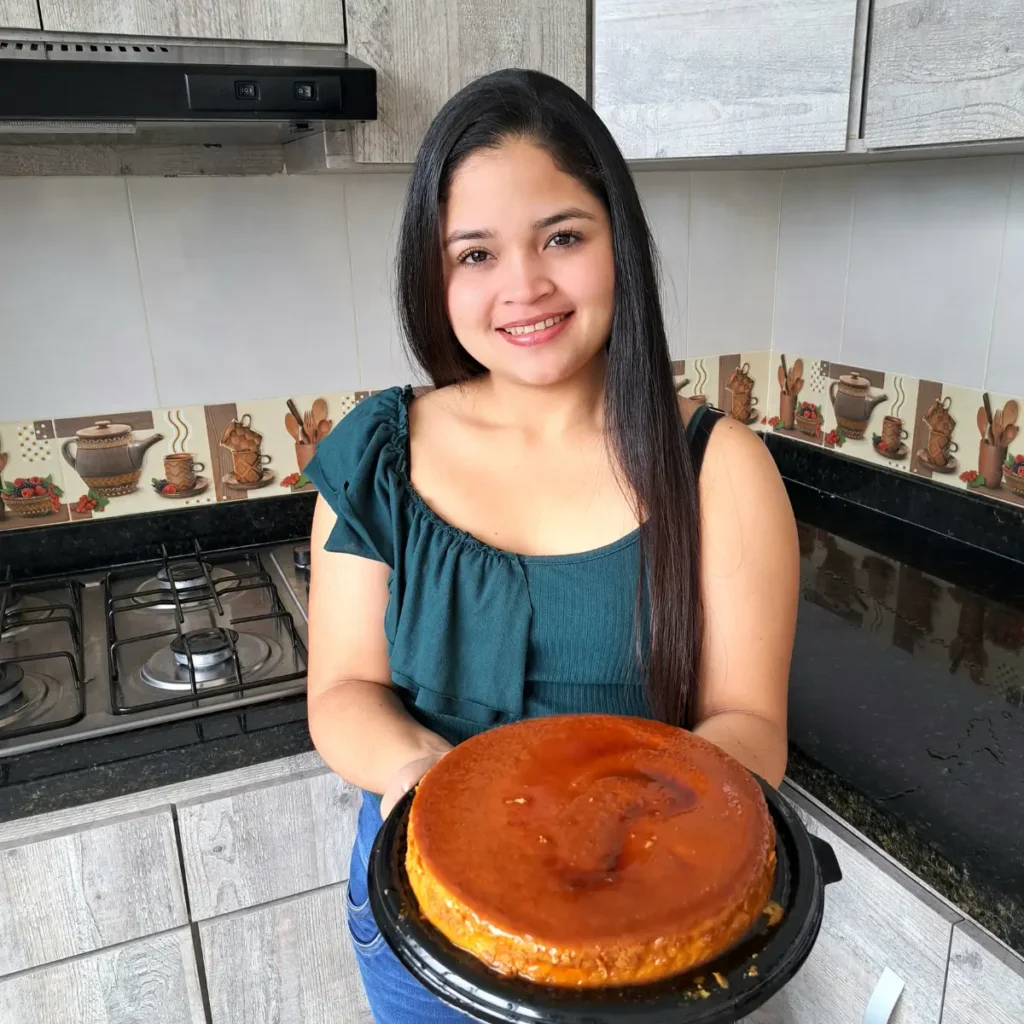
I grew up in Venezuela without guascas or papa criolla, and my first ajiacos in Bogotá were thin and pale until a neighbor watched me slice the potatoes and said the floury one had to go in first and fall apart. That one sentence fixed it. Josnaisis.