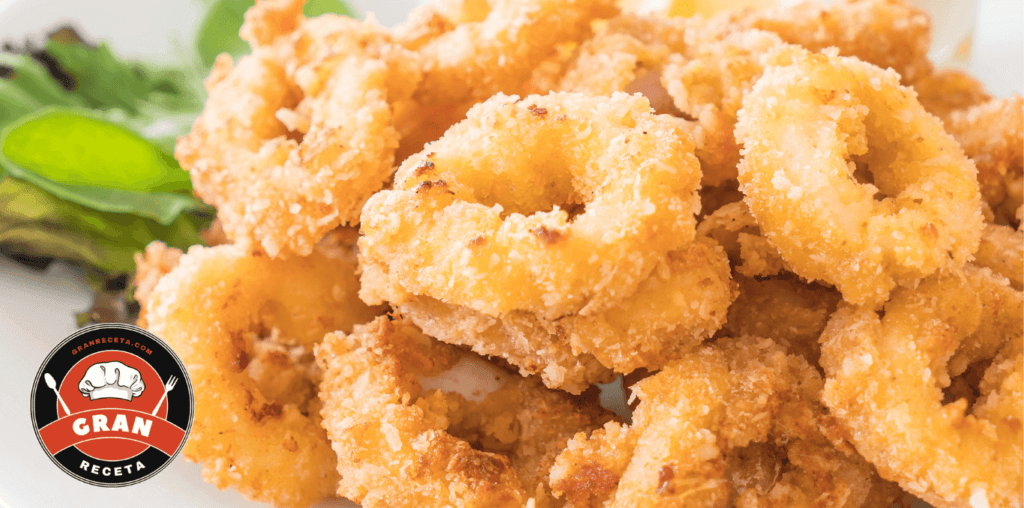

Squid has a window of correct texture of exactly 2 minutes at 180°C (355°F), and past that point the proteins contract and the result is rubber, not seafood. That single fact ruins more home fried calamari than any other mistake: it isn’t the squid, it’s the cooking time. This is the Colombian coastal version, chicharrón de calamar, in a cold-beer batter with cornstarch for crunch, and the recipe below is built around respecting that 2-minute window.
How do you make crispy fried calamari? Dry the squid well, coat it in flour-and-cornstarch, then egg-and-cold-beer, then back into the dry flour. Fry at 180-190°C (355-375°F) for exactly 1.5-2 minutes. The cornstarch batter gives the crunch; the cold beer gives the lightness. 25 minutes for 4 servings.
Why squid turns rubbery and how to avoid it
Squid has a specific protein composition that sets it apart from other seafood: its proteins coagulate and contract very fast with heat. There are 2 texture windows. In the first 2 minutes at high heat, the proteins coagulate but the muscle is still tender, so the squid stays soft and the coating crisp. Past 3 minutes at high heat, the proteins fully contract, push out the water, and the squid goes tough and rubbery.
The fix isn’t lowering the temperature; it’s respecting the time. Two minutes exactly at 180-190°C (355-375°F) is the right window. A thermometer isn’t a luxury here; it’s the tool that makes the difference.
Ingredients and why cornstarch and beer matter
Cornstarch. At a 1:1 ratio with the wheat flour it makes a crispier coating than flour alone. The flour gives structure; the cornstarch gives the crunch that holds after frying. Without it the coating goes soft within 2 minutes of leaving the oil.
Cold lager beer. The beer’s CO₂ makes bubbles in the batter during frying that lighten and aerate it. The cold temperature creates a thermal contrast with the hot oil, and that contrast makes a crispier coating. Warm beer doesn’t have the same effect.
Garlic powder and paprika. They go in the dry mix, not on the squid. Seasoning the coating rather than the seafood spreads the flavor evenly through every bite.
Cleaned squid. Tubes cut into 1 cm rings are the standard. Whole or halved tentacles give a different texture, more tender and with more concentrated flavor. A portion mixing rings and tentacles is more interesting than rings alone.
How to make it
The drying step, the most ignored one. Squid holds a lot of surface water, especially if frozen. That water stops the batter sticking and makes the oil spatter violently when the squid goes in. This isn’t a wipe with a paper towel; it’s pressing firmly on each piece for 2-3 seconds to draw out the moisture. If the squid is frozen, thaw it in the fridge overnight, never in hot water, then dry before coating.
The double coating. The three-step coat (dry → wet → dry) makes a thicker, better-stuck layer than just egg and flour. The first dry layer gives a surface for the liquid to grip; the wet beer-and-egg layer is the glue; the second dry layer forms the visible coating. Skip the first dry step and the coating slides off the squid in the oil.
Fitting it to your kitchen
- If it’s your first time — fry one test piece before the rest, to check the oil temperature and exact time for your kitchen
- If the calamari turns rubbery — the frying time was too long; cut to 1.5 minutes in the next batch
- If you don’t have beer — very cold sparkling water gives a similar effect; warm plain water is the worst option
- If you use frozen squid — thaw in the fridge, not in hot water, which starts cooking the squid before frying
- If you’re cooking for 8+ — make a double batch of batter and fry in groups of 5-6; never crowd the pot or the temperature drops and the coating soaks up oil
What ruins fried calamari
Wet squid. Surface moisture causes two problems: the batter doesn’t stick well and falls into the oil, and the oil spatters violently as the water flashes to steam. Drying well is the step with the most impact.
Cold oil. Below 170°C (340°F) the batter soaks up oil instead of frying, coming out greasy and soft. The squid absorbs more oil at low temperature too. Always preheat the oil before adding the first piece.
Crowding the pot. Adding too much squid at once drops the oil temperature sharply, from 190°C to 150°C in seconds. At that temperature the coating steams instead of browning. Maximum 5-6 medium pieces per batch.
Frying more than 2 minutes. The most costly mistake. Past 2 minutes the squid turns rubbery with no fix, since there’s no way to soften overcooked squid. If you’re unsure whether to pull it or give it 30 more seconds, pull it.
Variations
With panko. Replace the cornstarch with Japanese panko for a thicker, more textured coating. Popular in restaurant versions.
Spicy coating. Add 1/2 teaspoon of cayenne or hot paprika to the dry mix. The heat balances the squid’s marine flavor.
Whole tentacles. On Colombia’s Caribbean coast, whole fried tentacles are more common than rings, with more concentrated flavor and a more interesting texture.
With lemon. Marinate 10 minutes in lemon juice with salt before coating. The acid lightly tenderizes the squid fibers and adds a citrus note that survives frying.
What to serve it with
At about 310 calories a serving, on Colombia’s Caribbean coast fried calamari goes in picadas (sharing platters) next to patacones and a fried egg arepa. It’s the standard fried seafood of coastal restaurants, the coast’s answer to the inland fried trio of chorizo, morcilla and chicharrón you get on a bandeja paisa. As a starter it works before a heartier main like sancocho, and a side of golden coconut rice makes it a full coastal plate. With shredded-beef empanadas it rounds out a mixed fried spread.
Nutrition
Per serving (about 150 g with coating, no sauce): around 310 kcal, 22 g protein (squid), 28 g carbohydrate (flour and cornstarch), 12 g fat (absorbed oil and egg), 420 mg sodium. Uncoated squid has under 100 kcal per 150 g, and the coating and absorbed oil triple the calories. How much oil is absorbed depends on temperature: at 180-190°C the coating takes up under 10% of its weight; at 160°C it can take up to 25%.
Fried calamari was the first fried seafood I made when I moved near the coast in Colombia. In Venezuela we eat squid, but more in soups or in garlic, not battered and fried like this. The first time I made it at home it came out perfectly rubbery, 5 minutes too long in the oil. The second time I timed exactly 2 minutes and understood why coastal restaurants serve it so fast after frying: it isn’t impatience, it’s technique. — Josnaisis.