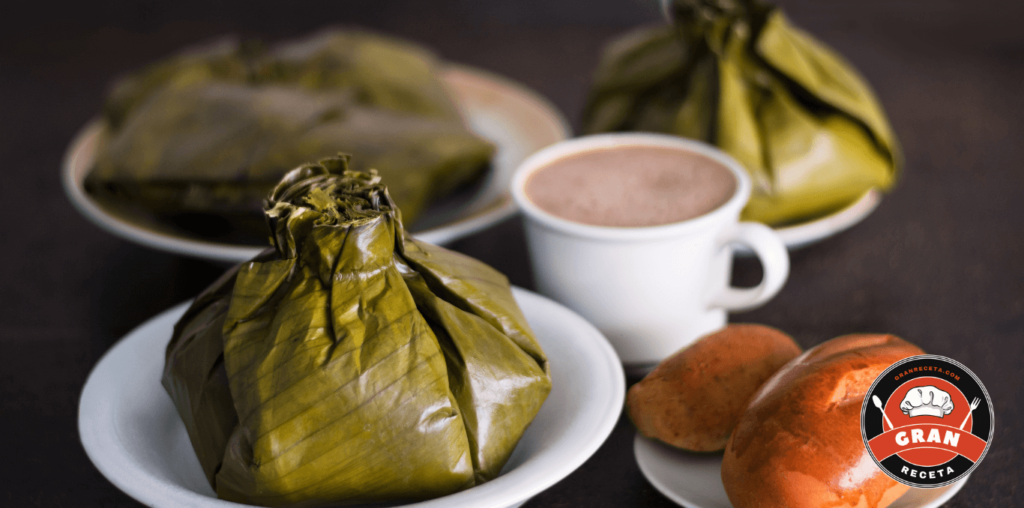
If your idea of a tamal is the Mexican kind, masa in a corn husk and a few hours’ work, the Colombian tamal tolimense is a different animal. TasteAtlas rates it the best-rated tamal in the world, and it earns it the hard way: a fist-sized bundle of corn-and-rice masa, three meats, egg, and vegetables, wrapped round in banana leaf with a little knot tied on top, then steamed for two and a half hours. It comes from the Tolima region in central Colombia, where it’s eaten from breakfast onward. The recipe below is the real thing, three-day corn soak and all.
How do you make tamal tolimense? Soak cracked corn 3 days, changing the water daily. Cook chicken, pork ribs, and bacon separately, saving the broth. Make masa from ground corn with an onion-achiote sofrito, al dente rice, and cooked split peas. Assemble in banana leaf with all the meats, potato, carrot, and egg. Tie with a top knot and steam 2.5 hours. Makes 12 tamales, about 270 minutes.
What makes the tamal tolimense different from other tamales
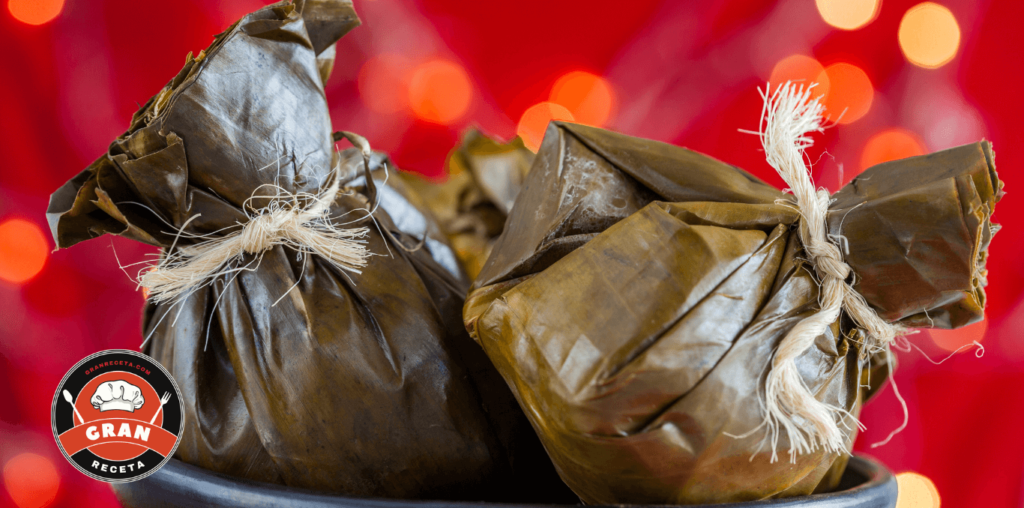
The tamal tolimense stands apart from every other Colombian tamal because its masa contains rice: the Antioquia version is 100% corn, no rice. Hard-boiled egg and split peas are distinctive too, absent from most regional kinds. And you know it on sight: wrapped round in banana leaf, tied like a gift with a knot on top, where most others are rectangular.
| Tamal | Masa base | Shape | Distinctive ingredient |
|---|---|---|---|
| Tolimense | Corn + rice | Knot on top | Split peas + boiled egg |
| Antioqueño | Corn only | Rectangular | No rice, no peas |
| Santandereano | Corn or rice | Rectangular | Chickpeas, smokier |
| Valluno | Corn | Rectangular | Minced filling + olives |
| Boyacense | Corn flour | Variable | Sausage, fava beans |
Colombia cooks an estimated 7 million tamales a day in the central region alone. June 24 in Tolima is a day dedicated to the tamal, eaten from breakfast to dinner and a centerpiece of the Ibagué folk festival during the San Juan and San Pedro celebrations.
Where the tamal tolimense comes from, a 500-year mestizo dish
The tamal tolimense has no inventor; it’s a collective, anonymous tradition passed down across generations. Its root is in the Indigenous peoples of the region, the Pijao and Muisca, who cooked corn masa wrapped in bijao or banana leaves long before the Spanish arrived. With the Spanish in the 16th century came new ingredients: pork, rice, chickpeas, and seasonings. From that fusion came the mestizo tamal we know: corn-and-rice masa, pork and chicken, hard-boiled egg, carrot, split peas, and spices, all wrapped in banana leaf. Each part carries history: the ancestral corn, the colonial pork, the leaves from the tropical lowlands. Those leaves come from the town of Coyaima, and they matter to the flavor as much as the wrapping.
The corn soak — 3 days isn’t optional
Cracked corn for tamal tolimense needs a 3-day soak, for concrete technical reasons:
Deep hydration. The dry grain is too compact to grind well without full hydration. Under 48 hours and the inside of the grain stays hard, leaving the masa gritty.
Daily water change. The corn ferments in the soaking water, and that’s not the goal. The water turns cloudy and sour after 24 hours. Leave it and the corn absorbs that acidity, giving the final masa an unpleasant sour taste.
How to check. On day three, press a grain with a fingernail. It should give completely, with no resistance in the center. If the center still resists, it needs another day.
The rice in the masa — al dente, mandatory
This is the technical detail most recipes skip: the rice inside tamal tolimense masa must be cooked al dente, not fully soft.
Why? The tamal cooks 2.5 hours in hot broth. Fully cooked rice keeps cooking through those 2.5 hours and dissolves completely, and the masa loses its signature texture of whole rice grains. Al dente rice finishes cooking inside the tamal and comes out right.
How to cook rice al dente for tamales: cook it half the usual time (8-9 minutes instead of 18). It should look opaque but the grain shouldn’t be soft to the bite yet.
Banana leaves — toasted right vs wrong
Untoasted banana leaves are stiff and crack when folded. Toasting makes them flexible. But there’s a correct range:
Untoasted: stiff leaf that cracks when folded, so the tamal opens during cooking.
Toasted right (10-15 sec per side over flame): leaf shifts from bright green to dull dark green and turns flexible and workable.
Over-toasted: leaf cracks, loses flexibility, and can taste bitter, as useless as untoasted.
During cooking the banana leaf releases its own substance, giving the tamal a characteristic smoky flavor that’s part of the tolimense identity. Banana leaves are sold fresh or frozen at Latin and Asian groceries; if you can’t find them, foil holds the tamal together but adds none of that flavor.
Fitting it to your kitchen
- If it’s your first time — start with half the recipe (6 tamales), same process, more manageable
- If you can’t find cracked corn — masarepa (precooked corn flour) works but changes the texture, softer and less grainy than the original
- If you can’t find banana leaves — foil contains the tamal but adds no smoky flavor
- If you don’t have a mill — a food processor in short pulses; the texture isn’t identical but it works
- If you’re cooking for 24 — double it; the cook time doesn’t change
What ruins a tamal tolimense
Not changing the soaking water daily. The corn ferments and the final masa tastes sour, which can’t be fixed. The daily change is mandatory.
Fully cooked rice in the masa. At 2.5 hours of cooking, soft rice dissolves completely. Al dente is the only correct state to add to the masa.
Untoasted leaves. They crack when folded and the tamal opens in the pot — the masa mixes into the broth and loses its shape.
Loosely tied tamal. Without the twine’s pressure the tamal opens during cooking. The knot must be tight; the leaf can wrinkle, but the packet shouldn’t open by hand.
Uncovering before 90 minutes. The first 90 minutes are critical for the masa to set. Uncovering loses steam and heat, leaving the masa soft.
What to serve it with
In Tolima the tamal comes with an arepa or insulso (a thin, saltless griddle cake) and hot chocolate, the classic Tolima breakfast, along with bread or cheese rolls. At Christmas the same table adds Colombian buñuelos and Colombian natilla, the eggless panela custard, the two things no December 7 in Colombia goes without. For a celebration table, the tamal sits beside the lechona, the two signature dishes of Tolima — there’s even a combination called “copete”: one tamal with lechona piled on top and crisp pork skin. It belongs to the same table of Colombian celebration food as a platter of bandeja paisa, a pot of sancocho de gallina, and mazamorra for dessert — any one of them feeds a crowd, and a single 520-calorie tamal is a full meal on its own.
Common questions about tamal tolimense
Does the tamal tolimense have rice? Yes, and that’s exactly what sets it apart from the Antioquia tamal, which is 100% corn. The tolimense masa mixes ground corn with al dente rice, giving a texture flecked with whole grains. It’s the trait that most surprises people from other tamal regions.
Can you freeze tamal tolimense? Yes: fully cooked and cooled, wrapped in its banana leaf with the twine intact, it keeps up to 3 months. To reheat: steam 20-25 minutes from frozen, or microwave 4-5 minutes covered in the same leaf.
Why did my masa come out too soft? Two possible causes: the corn held too much water (not drained well after soaking) or the tamal didn’t cook long enough. The masa should pull cleanly off the leaf; if it sticks, it needs 20-30 minutes more.
How long does the tamal keep in the fridge? 3-4 days in its closed banana leaf. The flavor improves the next day as the masa fully absorbs the meat juices.
Nutrition
Per tamal (of 12, masa plus full filling):
- Calories: 520 kcal
- Protein: 32 g (chicken, pork, bacon, egg)
- Carbohydrate: 48 g (corn, rice, peas, potato)
- Fat: 20 g (7 g saturated)
- Fiber: 5 g
- Sugar: 3 g
- Sodium: 720 mg
It’s a complete meal in one bundle: protein from three meats and egg, carbohydrate from corn and rice, vegetables from the filling. A whole tamal is a main meal on its own, which is why in Tolima it’s eaten from breakfast and carries you through the day.
The tamal tolimense was my introduction to the real complexity of Colombian cooking. Back in Venezuela our corn bollos are simpler, and the three-day process struck me as excessive until I tasted the result. The difference between a tamal of well-soaked fresh corn and one of precooked flour is completely there in the texture. The tolimense has a masa with its own character that no shortcut reproduces exactly. — Josnaisis.